This website uses cookies

This website uses cookies to ensure you get the best experience. By using our website, you agree to our Privacy Policy

International In-house Counsel Journal logoInternational In-house Counsel Journal logo
Back to library search

What's in a Name? Structured Products Disclosure and Labeling in the US and EU

Abstract

One of the many ripples in the wake of the financial crisis has been a renewed emphasis on regulation intended to enhance investor protection. Structured products, which have increasingly been sold to retail customers, have been the focus of much regulatory attention in the US and Europe. Both the Financial Industry Regulatory Authority (“FINRA”) and the Securities Exchange Commission (“SEC”) have jurisdiction over the sale of certain structured products in the US. Much of the regulatory focus in the US has been related to “principal-protected” notes, as a result of losses incurred by purchasers of such notes that had been issued by Lehman Brothers Holdings Inc. (“Lehman”) and that lost most of their value when Lehman declared bankruptcy in September 2008. FINRA issued revised guidance in this area in 2009 and the SEC was reported to have commenced an inquiry into the marketing of principal-protected notes in 2010. In Europe, the European Commission (the “Commission”) announced in 2010 its intention to regulate the sale of packaged retail investment products or PRIPs, which include retail structured products. The Commission initiative proposes a highly prescriptive standardized disclosure document that would be mandatory for all PRIPs. While both the guidance in the US and the proposed legislation in the EU are focused on sales practices as well as disclosure requirements, this article focuses on the disclosure aspects. After providing some background as context to the current regulatory environment, this article will outline the recommendations and proposals for the disclosures to be made in connection with the sale of structured products to retail customers in the US and EU with a view to raising awareness of, and offering guidance for compliance with, these evolving requirements.

PLS LogoCopyright & permissions

Author

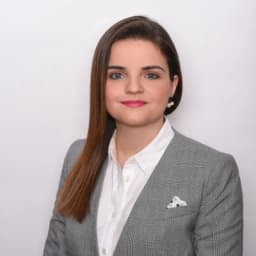
Portrait image of Margaret Scullin
Margaret Scullin
Partner, Fisherbroyles, USA

Margaret Scullin is an attorney with expertise in derivatives and structured products. Prior to joining FisherBroyles, she was Senior Counsel at SunTrust Banks, Inc. and worked in large law firms in Dublin and London. Margaret is a member of the New York and Georgia State Bars and qualified as an Irish solicitor.

Company

Fisherbroyles

FisherBroyles, LLP is a full-service law firm for the twenty-first century. Our Law Firm 2.0® business model prioritizes the highest quality of legal services by partners who have the most relevant expertise, while our structure maximizes efficiency, responsiveness, and value. Our law firm model simply aligns the interests of clients and attorneys by identifying and eliminating the inefficiencies of the traditional law firm model.

Related Papers

Corporate Conglomerates: The Rise and Demise (?) of ESG and DEI in Corporate America
The terms ESG and DEI are both catch words for positive social change and, more recently, highly controversial terms; in each case they can impact the financial condition of corporations....Read more
Portrait image of Bruce Ortwine
Bruce Ortwine
External Advisor, Global Legal and Compliance, Sumitomo Mitsui Trust Group, Inc.; Adjunct Professor of Law, Rutgers University School of Law, n/a, USA
The UK’s Copyright and AI Report: What In-House Counsel Need to Know (and Do) Now
In March 2026, the UK government published its long-awaited report on copyright and artificial intelligence. The report runs to over 120 pages. It covers technical infrastructure, international comparisons, licensing markets,...Read more
Portrait image of Winona Chan
Winona Chan
Legal Counsel, Moneybox, UK
Human and the Loop: What are we Assuming About the Human?
Most lawyers who regularly use generative AI have probably had the following experience. They ask an AI system to review a contract, summarise a regulatory development or produce a...Read more
Portrait image of Audrey Ng
Audrey Ng
Head of Legal, South East Asia, State Street, Singapore
Agentic AI and Liability
Agentic AI represents the current frontier of generative AI — and a fundamental shift in what AI systems do. Unlike earlier AI tools that process data or respond to prompts,...Read more
Portrait image of Matthias Artzt
Matthias Artzt
Senior Legal Counsel, Deutsche Bank AG, Germany
Portrait image of John deVadoss
John deVadoss
Co-Founder, NeuralFabric Corp. (acquired by Cisco Systems), USA